Here is a guide to the sections on this page in the order they are presented: Introduction; The Truth About Prisons; Abolitionist Framework; Alabama is Building A Mega-Prison Right Now; Introduction to the Free Alabama Movement; Existing Research on Prison Health; and References.
The Truth About Prisons
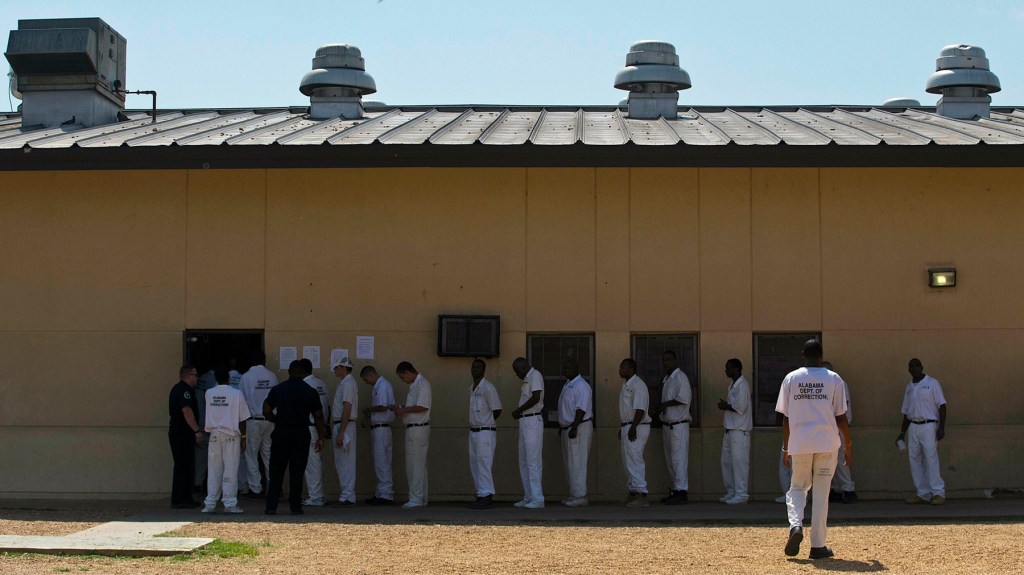
Prisons and policing descended from chattel slavery as a means to legalize enslavement, which we can still see in the 13th Amendment of the United States Constitution.
“Neither slavery nor involuntary servitude, except as a punishment for crime whereof the party shall have been duly convicted, shall exist within the United States, or any place subject to their jurisdiction.”
The prison industrial complex can be analyzed through many frameworks but one that is often overlooked is through a Pubic Health perspective. Prisons cannot function/exist without simultaneously enabling a public health crisis. They are created to punish people through health violence, alienation, mental and physical torment, starvation, and more. This project’s analysis of violence caused by prisons will provide concrete evidence for how prisons are a tool for the health deterioration of incarcerated people. From outbreaks of contagious illnesses to healthcare neglect to murder itself, prisons use health as a weapon against incarcerated people.
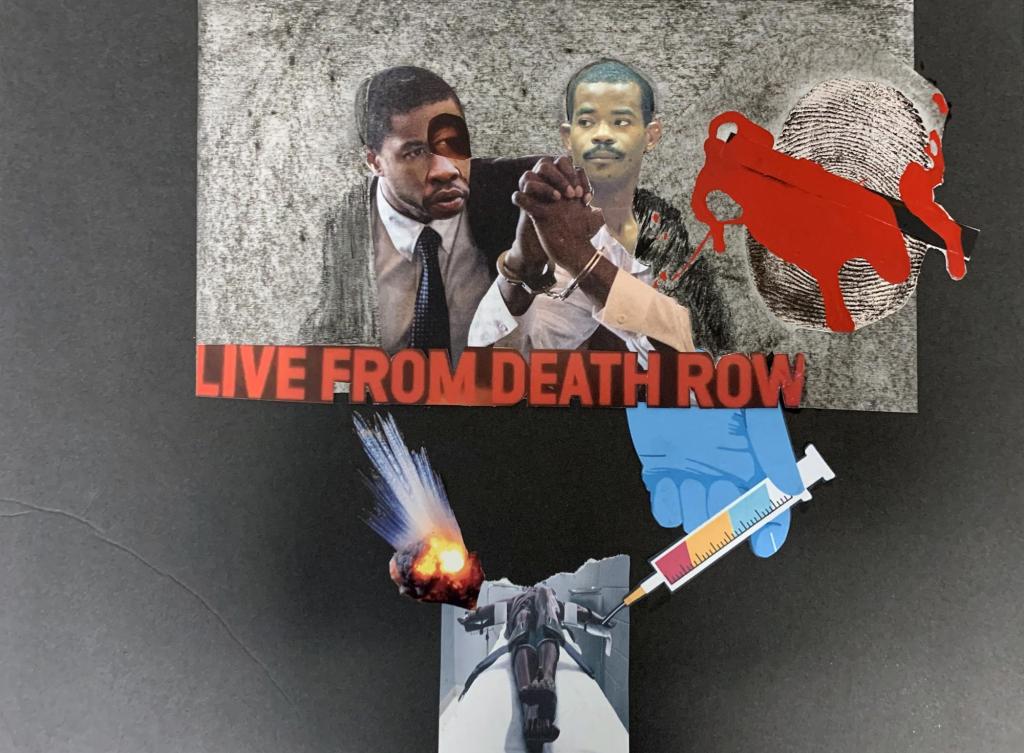
The health of incarcerated people is not solely limited to within the walls of the prison sentence. 27 states use the death penalty which is the legalized murder of a criminally charged and “guilty” person by the government. The power of life and death is given to a system that is rooted in white supremacy, capitalism, and a system that is known for faulty charges and persecutions. In 2024, 25 people were murdered by the death penalty, including 6 from Alabama.1 This year also marks the first time a nitrogen gas mask was used, murder through suffocation, this development is led by Alabama.2 This method of attacking one’s health is more straightforward in its intention. The death penalty is a scheduled and broadcasted murder and can be argued to be the most honest form of health violence the carceral system enacts. It does not hide that the State seeks to destroy the body of an incarcerated person. This paper looks to uncover the tactics prisons use to harm the bodies and health of those incarcerated.
Abolitionist Framework
This project is done through an Abolitionist Framework. It aims to interrogate the existence of prisons and how they function. This website is an attempt to make the horrors of Alabama prisons more accessible and known so we can learn the direct ways we can fight it, learning from incarcerated people and their expirences.
Using the FAM Freedom Bill in the “What Now?” tab we will explore immediate life-saving reform while discussing long-term strategies for dismantling the system entirely. No amount of reform can salvage a system built off the enslavement and suffering of Black and Brown people. Instead of soley relying on reform to end modern slavery, we must use our imagination to create a new vision of what responses to harm can look like. Inside and outside the prison the existence of a prison industrial complex threatens the lives of Black and brown people for simply existing. In the year of 2024, cops murdered 1,366 people.3 How many murders need to be televised for us to realize the prison industrial complex strategically normalizes Black and Brown people’s deaths?
Carceral violence begins before the prison, it begins the very moment police are given the power to arrest, surveil, carry arms, and simply exist. A nation built off the enslavement of people, on stolen land, can only exist through continuous violence and policing to maintain oppressive control. It can be daunting to contend with the realities of the cruelty of a world that is running on violent ideologies such as white supremacy, racism, capitalism, misogyny, and more, but acknowledging this violence helps us know what we need to organize against. It also helps us build community with others who are working to create a safer world for everyone. This research is done out of a place of love and gratitude to all of those who have lost their lives to carceral violence, communities grieving at the hands of the State, incarcerated people, abolitionist organizers, and people who want to build a safer, just, and liberated world together.
Iconic abolitionist organizer Mariame Kaba puts it simply saying:
“What if we invested in everything that actually keeps us safe—food, shelter, clean water, care—instead of punishment?” 4
-Mariame Kaba, We Do This ‘Til We Free Us, 7.
Carceral violence is a public health crisis that must be addressed. I am writing this as a student completing a Bachelors in Medical Anthropology. Prisons are too often ignored within health fields. As a person committed to public health, we cannot distance ourselves from the preciousness of life. We cannot normalize state-sanctioned violence and death. We must reconnect ourselves to the care and humanity that public health necessitates so that we may be able to truly fight for a world where everyone has the freedom of health.
May this project honor the fight for abolition and liberation. May it honor those who have lost their life at the hands of carceral violence. May it honor families and communities who have to live with this violence daily. There are enough academic papers and projects that discuss mass prisons, policing, and carceral violence with the sole use of statistics and a sense of emotional detachment. This project is one written with love and commitment to a liberatory world that is safe for all people. This project is an analysis of public health within prisons so that violence is not faced alone by incarcerated people. The normalization and neglect of prison health is a reproduction of carceral violence and to fight against it, we must know what to fight against.
Alabama Is Building A Mega-Prison Right Now
As I write this, Alabama is in the process of following through on a 2021 bill that approved budgeting for a new prison in Elmore and Escambia County. Only one has begun its construction and stands on over 300 acres, has 4,000 beds, and costs $1.3 billion to build.5 The creation of a massive prison is a safety concern as it isolates, permits physical and medical abuses, and traumatizes people who are incarcerated. This is not to mention that this project is in response to a prison being decommissioned in 2020 due to uninhabitable conditions and a federal lawsuit against the unconstitutional living conditions of men’s prisons in Alabama. To add to all of this, the legislature allowed the use of $400 million from the 2021 American Rescue Plan Act that was intended to provide COVID support.6 Alabama has continuously defunded programs that are important to health, education, and justice in Alabama while reallocating this money to things such as this prison. This is exemplary of why defunding the prison and military-industrial complex is essential for the betterment of social programs. We should not engage in the violence of policing in the first place, but for those who are less convinced of this, the money we use for these endeavors could be used to make sure everyone’s needs are met in the community. If there were $1.3 billion what would you use it for to improve living conditions for people in Alabama?
Below is a video that is a very short news segment from 2021 that discusses billboards put up in Alabama to protest the approval to build mega-prisons. This was a collabortion between Black Lives Matter and Alabama Students Against Prisons.
Introduction to Free Alabama Movement
Below is an introduction to the Free Alabama Movement (FAM), a grassroots organization founded by incarcerated men in Alabama. This is a document made by FAM that lays out their mission, demands, and contact information.7 They champion the fight against Alabama prisons, sharing what is happening inside the prisons, from organizing information to the living conditions. This website includes many videos from FAM and I encourage people to visit their website and channel.
Existing Research on Prison Health
As of 2023, there were around 2 million people incarcerated in the United States, disproportionately Black and brown people.8 There is growing concern for the unconstitutional and cruel conditions of prisons in the United States, as seen in a growing number of studies that examine health in prisons. Inhumane prison conditions and practices are the natural progression of the prison industrial complex because it originates from chattel slavery and a desire to control, abduct, and kill Black people.9 Using three lawsuits against Alabama prisons, this paper will argue that prisons inherently enact health violence and are a public health crisis. To start this paper, I want to begin with existing research on prison health, which has exposed unconstitutional punishment that is often expressed through medical neglect, as seen in a lack of healthcare access and a disregard for unsafe living conditions.
The basic needs of a healthy life are often minimized to nutritious food, clean water, and a safe shelter. Existing research shows that prisons fail to provide the bare minimum needed. In 2020, a law journal published research revealing that many prisons across the United States are near toxic environments. The paper connects environmental racism to the health impact incarcerated people face when they are forced to live in prisons that are by tar pits, nuclear waste, former coal ash facilities, and more.10 In a 2021 study titled “Do Prisoners’ Lives Matter? Examining the Intersection of Punitive Policies, Racial Disparities, and COVID-19 as State Organized Race Crime”, the author articulates this phenomenon of exposing incarcerated people to unsafe conditions as “slow violence”.11 Bradshaw studied prisons in Michigan during the beginning of the COVID-19 pandemic to document the medical neglect of incarcerated people, especially Black people. These two studies exemplify how the lives and health of incarcerated people are neglected. Both exemplify how health violence is broader than a quick attack on one’s body, it can be a long process of neglect or exposure to a harmful environment.
Health neglect is a key strategy of health violence and is a global and long-standing tactic. Decades ago, a 1977 study in the United States came to the conclusion that prisons needed to offer more healthcare options, such as regular screenings, mental health counseling, and health education programs.12 Fast forward to 2009, and a study from the United Kingdom still pleaded for prisons to offer mental health services for incarcerated women. Interviews from this study highlighted hidden issues in prisons, like suicides. Women detailed feelings of distress and depression after watching many people commit/attempt suicide.13 While prisons are known for having high rates of death, both from suicides and homicides, the specific data can be hard to find. A 2023 study found data regarding suicide rates in U.S. prisons inaccessible and impossible in 13 states. The lack of documentation is directly in violation of the 2000 Death in Custody Reporting Act.14 Not only do prisons fail to provide mental health care to prevent suicide or counsel those who had to watch it, but they also fail to document deaths to the fullest extent. The lack of accurate and comprehensive documentation limits research but has simultaneously encouraged more people. The erasure of mental health struggles, via data, in prisons allows the realities of health violence to stay hidden, which is why all of these studies are so important.
Health issues are not solely a consequence of being in prison; many incarcerated people come in with pre-existing medical conditions and struggle to find proper treatment within the prison.15 Prisons exacerbate pre-existing conditions and are places where pandemics, illnesses, and violence exist without the infrastructure to combat them. Another study by a British medical journal used United Nations Principles to critique preventable deaths within prisons that could be mitigated with nutritious food, access to exercise, and educational programs.16 Many factors contribute to prison health violence, and many still need to be studied. A 2018 study looked to see the difference between the provided programming for incarcerated people in public prisons versus private prisons, the latter having the potential to be more incentivized by conservative budgeting.17 Another study from 2018 investigated how isolation, solitary confinement, and overcrowding contribute to health issues.18 These two studies, and all above them, have pointed out the many ways in which prison health can be examined, yet there is so much more to do.
This paper builds on the research of others to add more evidence that prisons are a public health crisis and disproportionately target marginalized groups. The negative impacts and cruel living conditions of prisons are a growing research field, but there are very few academic papers on Alabama prisons specifically. Outside of the news and Southern non-profit organizations, Alabama prisons go under-documented, despite their gruesome conditions. Studying Alabama specifically brings a new perspective to existing prison research.
 PRISONS ARE A PUBLIC HEALTH CRISIS: ALABAMA PAVES THE WAY