Here is a guide to the sections on this page in the order they are presented: Introduction; Access to Healthcare and Treatment: Pandemics; Access to Healthcare and Treatment: Lawsuit; Living Conditions; Modern-Day Slavery; Abuse, Violence, and Death in Prison; and References.
Introduction
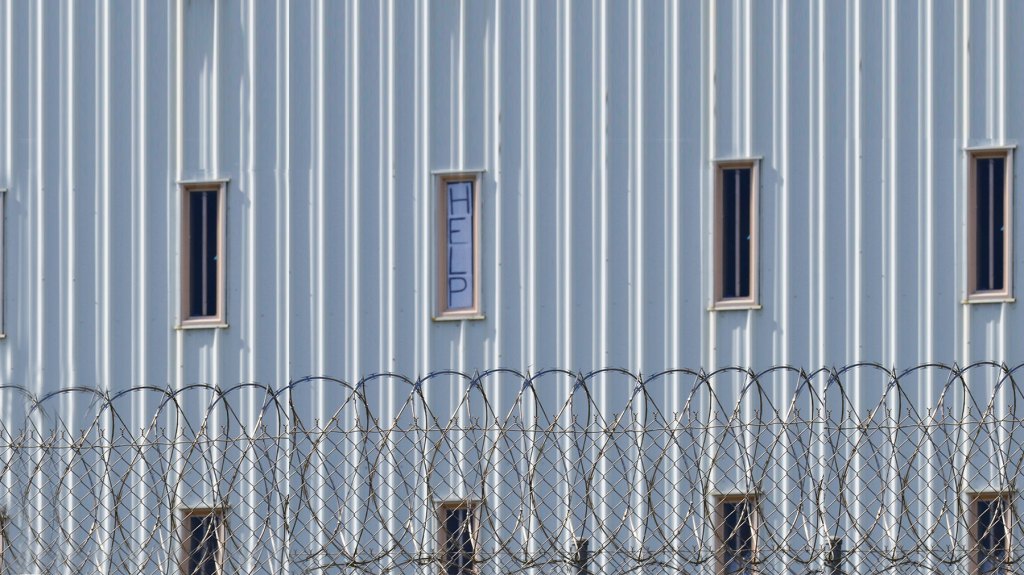
This section is an assortment of evidence to expose how mistreatment in prisons is a direct attack on the health and safety of incarcerated people, therefore being a public health crisis. The evidence is broken up into four themes: access to healthcare and treatment, living conditions, modern-day slavery, and lastly abuse, violence, and death in prison. The four sections often merge as they are often connected. I encourage people to watch the videos attached, as these include testimonies from incarcerated people and formerly incarcerated people. No amount of statistical reports or lawsuits can capture the full depth of the cruelty of these prisons, but videos and testimonies from incarcerated people take us closer to the truth.
The first video I want to include in this section is below. This video is from the Free Alabama Movement, where a main organizer and peer describe their experience in a lockdown block in St. Clair Correctional Facility in Springville, Alabama. They discuss the prison’s racial segregation, unhygienic infrastructure, overcrowding, food, violence, and more. One of the men says he has seen 8 murders in his 7 months in prison. The realities these men share with us are hard for people outside of prison to internalize, the living conditions are truly unimaginable. Words from incarcerated people are the most important sources for us to listen to. Please start this section with this video as it off the best introduction that can be given.
Access to Healthcare and Treatment: Pandemics
Prisons are places that cause health issues, not treat them. The enclosed and compact environment of a prison is a nightmare for attempting to contain communicable ailments from spreading. I have often heard the saying that schools are “like a petri-dish”. If this is how we describe an environment where people can leave, how do we describe an overcrowded building that people cannot leave? It is an unclean place where no care is given to the environment, a place where there is not room to quarantine or the materials to adequately clean and disinfect oneself or their area. Prisons are not equipped to address pandemics, rather they are incubators for them. Incarcerated people live in overcrowded, unhygienic dorms which is the perfect environment for sicknesses to spread.
To help understand pandemic care in Alabama prisons, I want to give 3 examples across the past 30 years.
- A 2001 research paper investigates the syphilis outbreak in Alabama men’s prisons in 1999. The research starts by stating that in 1998, Alabama was in the top 10 highest rates for people incarcerated and syphilis infections.1 Being within a prison or jail is an increase in risk to one’s health as life is controlled by the guidelines and access given within the facility. An incarcerated person’s health is at the disposal of the place they are in.
The researchers concluded that there were delays in tests, treatments, and in one case a person never got results back from a reported genital lesion.2 There was also a lack of routine testing, including failure to meet national guidelines requiring sexually transmitted infection testing within 2 weeks of all arrivals in jails. These are examples of reasons why syphilis has been known to spread in Alabama prisons.There were at least 4 syphilis outbreaks in Alabama men’s prisons between 1991-1996.3 This paper is an attempt to address an overlooked place of STI outbreaks. As mentioned throughout this project, prisons are places where health is ignored and undermined. This can be seen from research over 20 years ago and our need for more information on public health in prisons persists to this day. The fight for the healthcare of incarcerated people will last until prisons are gone.This study also starts with an important reminder that prisons and jails which is that jails are different and distinguished by jails being intended for short-term placement for people with smaller chargers or waiting for trial.
- In a 2014 study, researchers interviewed formerly incarcerated women in Alabama, living with HIV, about their experience in prison. This research was done as a way to examine how Southern states, places of higher HIV rates, high rates of incarceration rates for women living with HIV, and places of low public health education and programs deal with HIV in carceral settings.
Black women are disproportionately impacted by both HIV and incarceration. This intersection makes a more dangerous situation for Black women in need of medical care from a white supremacist institution. Out of the 25 participants, 76% of them were Black women.4 This is important as it loops into larger themes of prisons as places that uphold and facilitate white supremacy. The study found that the prisons used stigma-based practices toward women living with HIV such as segregating and isolating them from other incarcerated people, verbal abuse from staff, and restricting meal times and jobs related to food.5 For HIV care and treatment, women often struggled to access healthcare and mental health professionals and had a general lack of good and timely healthcare. Not only are these women being dehumanized and forced to live in a cage, but they are being denied vital healthcare. Instead of providing them with the materials and support they need, they encourage isolation and harrassment to women living with HIV. No one is safe in prisons and they are extremely dangerous for those who at the intersection of many marginalized identities. As Audre Lorrde said in 1981, “I am not free while any woman is unfree, even when her shackles are very different from my own.” 6
Testimonies from participants:
“[T]hey put you in isolation till your Western Blot comes back, even if you tell ’em you’re [HIV-]positive. And I was in isolation Christmas Eve and Christmas with nothing but a bible. It was cold. No hot water. It was miserable. But, anyway, it made me reflect on my life, you know? So I decided then to get as much knowledge as I could [about HIV].”Testimonies from participants: 7
“They had one of them locked in, ’cause she was HIV . . . And they put her food through the little hole . . . They ain’t let her out, ’cause she was HIV . . . Yeah, [they treat her] like she was poison, and she couldn’t be around us or nothing like that.”Testimonies from participants: 7
- Lastly, in 2018 there was aStreptococcus pneumoniae breakout in an Alabama prison. Out of 1,276 inmates there were 40 detected cases.9 Streptococcus pneumoniae is a bacterial infection that is transmittable by droplets found in the air and on surfaces. It can lead to more serious illnesses such as Invasive pneumococcal disease (IPD) which was found in an inmate who died in 2018. This research was brief but concluded that outbreaks of Streptococcus pneumoniae (and its following sicknesses) can be minimized by reducing the number of people incarcerated, providing vaccines, and better attention to sicknesses.10 Prisons are not places that truly value community health and safety so the best way to prevent pandemics and spread of illnesses in prisons is to abolish prisons. Until then there must be very serious attention to making health care accessible to all incarcerated people
Pandemics are one of many historical events that highlight how strong/weak a community is. When COVID-19 first started in 2020, the United States revealed how unprepared and apathetic our infrasturctres are to the health and safety of people. We saw and continue to see Black, brown, and low income workers being forced to risk their lives to uphold routine capitalistic practices. Prisons are no exception to this, and are in fact the hidden essential workers of our society. In one of the following sections we will dicuss prison labor more throroughly, but our society is currently dependednt on the slave labor of incarerated people. The government, politicians, and corporations do not want to protect incarcerated people from pandemics because they are seen as dispensable working bodies.
Access to Healthcare and Treatment: Lawsuit

To learn more about healthcare within prisons, I have attached a lawsuit from 2014 against the Commissioner, Associate Commissioner of Health Services, and the Alabama Department of Corrections as a whole. This case, with over 50 plaintiffs, is from incarcerated people in Alabama prisons who filed a complaint of unconstitutional medical neglect and abuse. The plaintiffs document constant denial of medical care, forced involuntary medicating, and a lack of mental health services despite high rates of mental illnesses. Plaintiffs also document disregard to disability accommodations while incarcerated. This case document is over 130 pages and full of horrifying testimonies from plantiffs. Because of the length, I will include only a few sections from the complaint file, but please feel free to look through the document attached below to read more.11
Sections from within the lawsuit:
- 78. “On February 6, 2012, at St. Clair, a prisoner who had recently had surgery began bleeding from his rectum. He bled through three pairs of pants in a day. He asked for medical attention. He was given only antacids. He died that night.” (pg 31)
- 261. “PLAINTIFF TERRELL is housed in the Bullock RTU. This is the unit for the most acutely mentally ill prisoners in ADOC custody. PLAINTIFF TERRELL has been diagnosed with bi-polar disorder, schizophrenia, depression and PTSD. PLAINTIFF TERRELL experiences auditory and visual hallucinations. He has great difficulty placing events in relation to each other in time. He sleeps most of the time, sometimes for a day and a half at a time. In addition to taking medication, he sees a counselor for about five minutes every two weeks and a psychiatrist for about five minutes once a month. He receives no other mental health treatment. He has not been permitted to participate in any programming for several years.” (pg 77)
- 147. “Plaintiff Dunn cut himself with a razor blade on several occasions during a nine-month period in segregation. On one occasion, on or about March 15, 2014 just before 6:00 p.m., he cut himself so deeply that he cut a tendon in his forearm. Plaintiff Dunn promptly told a sergeant that he had cut himself. The sergeant responded, “Why do you keep doing this on my shift? Why don’t you just go ahead and kill yourself.” Shortly after 6:00 p.m., a nurse came by, and Plaintiff Dunn showed the nurse his arm. The nurse said he would return when he had time, but did not come back. At approximately 9:00 p.m., Plaintiff Dunn was taken out of his cell and placed in a cell outside. He was beaten by two officers in the cell, then left there for another hour. At approximately 10:00 p.m., he was taken to the infirmary. The nurse at the infirmary attempted to staunch the blood flow from Plaintiff Dunn’s arm, but was unable to do so. At approximately 11:00 p.m., Plaintiff Dunn was taken to Brookwood Hospital, where several staples were put into his arm to hold the wound closed.”(page 52)
- 158. “Medical staff have given Plaintiff Baker the wrong medication many times. On one occasion, she suffered a severe reaction to an incorrect medicine that was given to her. She has no recollection of what happened, but has been told by other prisoners that she was completely out of control for several hours.” (page 55)
- 363. “Several blind prisoners have reported that they are routinely asked to sign documents that they cannot read. Plaintiff Copeland signed a Do Not Resuscitate order without knowing what it was. Another prisoner, Larry Shepherd, now deceased, had his hand was placed on the spot where he needed to sign, and believed that he was signing a property sheet relating to his transfer; he later discovered the form was a Do Not Resuscitate order.” (pg 106)
- 390. “On July 3, 2014, approximately two weeks after this lawsuit was filed, Plaintiff Mork was told by a correctional officer that his life and the lives of other plaintiffs were in danger. Defendants Thomas and Naglich were informed by Counsel of this communication on the same day. As of July 9, 2014, no one had come to speak with Plaintiff Mork to investigate this serious matter.” (pg 15)
This case exposes the myriad of ways ADOC perpetuates health violence, from neglecting life-saving care to encouraging suicide. The refusal to provide reliable, safe, and attentive medical and mental healthcare is a direct attempt to cause pain and suffering to incarcerated people. As the testimonies above show, prisons do not treat the incarcerated people as people. They create an environment of dehumanzitation and suffering that normalizes health violence and susbequent death.
Living Conditions
In 2020, the Department of Justice sued the state of Alabama and the Alabama Department of Corrections for violating incarcerated men’s Eighth and Fourteenth Amendment. This case started in 2016 when the federal government started an investigation about the safety of incarcerated people. This included physical abuse and sexual abuse from other incarcerated people and prison staff. It also was to investigate the safety and sanitary standards of the prisons.
In 2019 the federdal government found probable cause for men’s prisons in Alabama being unsafe and violating incarcerated peoples Eighth Ammendment rights. In 2019 there were at least 19 deaths between incarcerated people in prisons. The data for deaths and violence in these prisons is very undocumented and unreliable as the staff refuses to accurately and reliably document the harm. This means that there the accurate reporting of violence and deaths from prison staff would be hard and maybe impossible to find.
The staff does not try help during conflicts and often do not find or report bodies for a while after their injuries. The staff secretly allows drugs in the facilities, despite the many drug overdoese that have led to many deaths in Alabama prisons and the lack of accessibility to mental and physical health care. Prison staff has been documented using chemicals, excessive force, and antagonizing incarcerated people, even to the point of death. The overcording of prisons are a big reason for the violence between incarcerated people. In September of 2020 there were over 15,200 men in Alabama prisons that were meant to hold about 9,882 men. This overcrowding causes tensions when people have to share minimal resources to toilets, showers, and beds. The sanitary issues include insufficient plumbing, often having flooding toilets. More of this information can be found in the lawsuit complaint from below.12
All of the above infromation is gathered from the lawsuit complaint document below. This lawsuit is a shorter read of 24 pages compiled of research the Department of Justice has done in order to pressure the Alabama Department of Corrections to address their unconstitutional practices. It says a lot that an organization like the DOJ- an organization that’s goal is to continue the Unites States’ existence, as a white supremacist empire – says that Alabama prisons are unconstitutional. An organization that values prisons and policing is suing ADOC, the conditions are so bad that the police are turning on themselves. Alabama prisons are in a state of emergency and they will be as long as they exist. Incarcerated people are denied healthcare, nutrious food, safe shelter, programming, and more. Being sentenced to prison in Alabama is a death sentence.

Modern-Day Slavery
Prisons were created as a way to continue slavery under a more palatible name. In the video above formerly incarcerated people in Alabama talk about their experience with prison labor. Incarcerated people are forced to work, get paid very little, and are given jobs that no one wants. This is modern day slavery. For this section, I really want to emphasize watching this video to hear from people who have experienced this themself.
The file below is a current ongoing case of six incarcerated who have been forced against their will to work for the Alabama Department of Corrections and corporations they partner with. 13The lawsuit is thoughtfully written to include the history of prisons, citing Black Codes aimed at re-capturing freed Black people. The document also provides historical context about Alabama’s use of convict leasing, a practice where corporations pay to “lease” incarcerated people to do their work. To discuss the use of prison labor as slavery now it shares that plaintiffs make only $2 after a day working for Alabama Correctional Industries. And for plaintiffs what worked for free-world private employers, ADOC took away 40% or more of their pay. This whole case file is so important, and my short summary does not do it justice. I have included some very important sections from the lawsuit below in an attempt to pull out key points.
Sections from the lawsuit:
- 3. “In Alabama, slavery and involuntary servitude did not end with the Civil War. A century and a half ago, these practices simply moved from the plantation to the penitentiary. For generations, state officials have maintained a system of forced labor intended to extract profits off the backs of Black and poor Alabamians and maintain them in a state of subjugation.” (pg 2)
- 4. “Despite the recent change to the constitution, incarcerated people in Alabama continue to labor against their will every day, knowing that if they decline to toil, ADOC officials will subject them to a variety of legal and extra-legal sanctions, including extending their time in prison by taking away good-time credit, subjecting them to additional underpaid forced work, ordering them to solitary confinement, transferring them from their work-release centers to higher-security prisons, and making it far more difficult for them to be considered for parole. ” (pg 2)
- 43. As these changes to the state constitution were being enacted in the decades following the Civil War, Alabama law enforcement officials targeted the state’s recently freed Black population to fulfill a growing need for labor, as reflected by the composition of the state’s prison population used for labor: within a decade, the state prison population changed from 99 percent white pre-Civil War to 90 percent Black post-Civil War (pg 11)
- 58. Convict leasing revived some of the most violent practices inherent to—and perfected under—the institution of slavery, “including torture, whipping, patrols, and cash rewards or runaways” to control incarcerated workers. (pg 15)
- 79. “For much of the last century, Alabama’s prisons have been, and still are, widelyregarded as some of the most dangerous and inhumane in the country. Indeed, Alabama prisons have five times the national average death rate.39 In 2024, 325 people died in ADOC custody.” (pg 20)
- 164. “Incarcerated workers in ADOC custody who work for ACI have generated over $3 million in annual profit for the State of Alabama, as of September 2023.82 And, according to ADOC’s own reporting, work release workers generated $12,942,048.13 for the State of Alabama between October 2022 to September 2023.83 These figures do not include the many millions of dollars that ADOC saves by assigning incarcerated workers to carry out a wide variety of essential tasks inside prison walls.” (pg 39)
It is truly unbelievable that we as a society have normalized and accepted institutionalized slavery and oppression of Black people. I think that this section speaks for itself that the existence of prisons is truly a crisis beyond reform. We cannot continue to reform slavery, we need to abolish it.
Abuse, Violence, and Death in Prison
The video above is a recent news segement on incarcerated fire fighters’ involvement in the January 2025 California fires. A firefighter in the video says that being there, fighting fires, is more “freeing” than being in the prison. In one of the interviews a says someone says they make $2 a day. I am adding this example from California because incarcerated people’s lives are not only at risk within the prison, but also when they are forced to be essential workers. This is a consequence of prisons everywhere. This goes across party lines. California, a blue state, also puts incarcerated bodies on the line. The prison industrial complex is an institution that can only survive on abuse, violence, and death.
Incarcerated people face attacks on their health and life from all angles. They live in a hostile environment, with minimal and nutrious deficient food, unhygenic living spaces, and are forced to work. No part of this is beneficial to maintain good health. This can only end in a health crisis for people within prisons. Prisons can only exist as a physical parasite that kills and an societal parasite that contaminiates our humanity. Prisons are a public health crisis that we must address!
 PRISONS ARE A PUBLIC HEALTH CRISIS: ALABAMA PAVES THE WAY